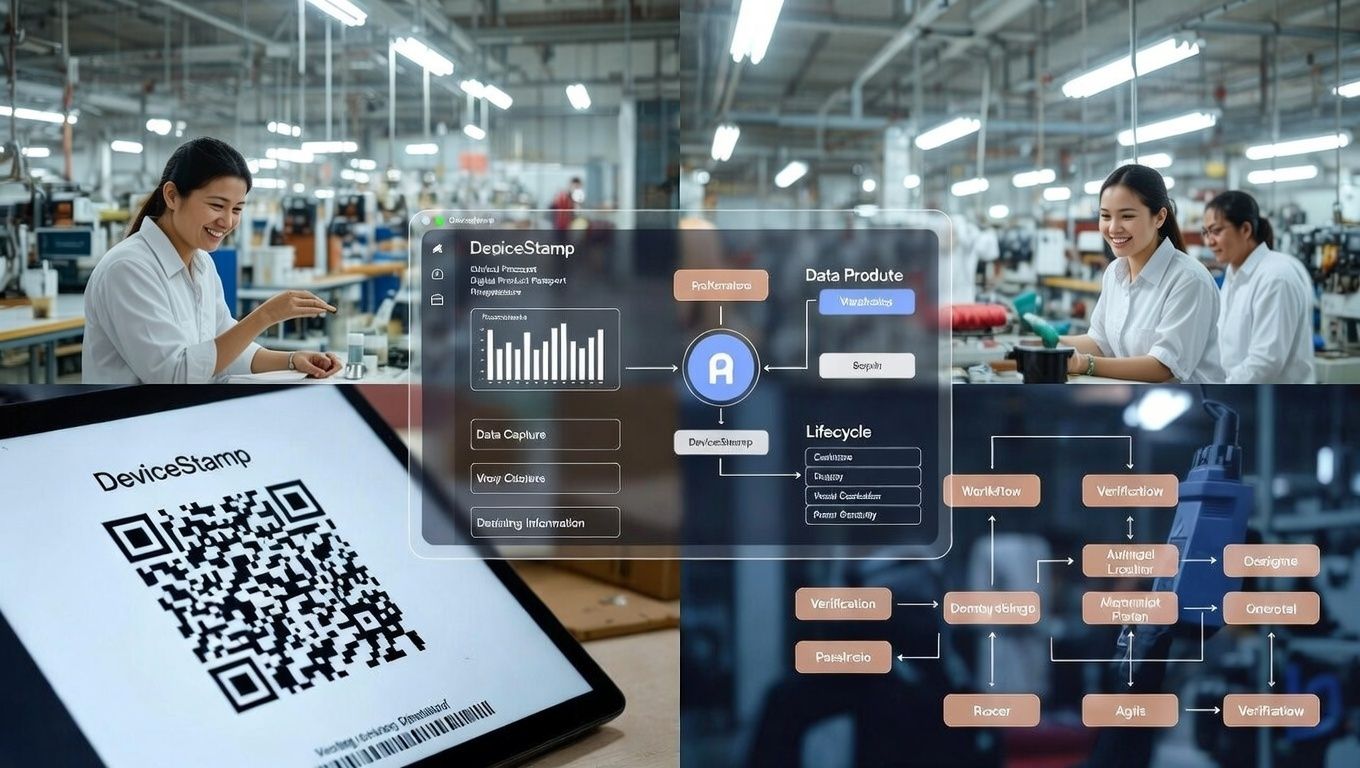
DeviceStamp to deploy DPP infrastructure in Bangladesh pilot to support EU Digital Product Passport preparedness
Joint Announcement
DeviceStamp and ProKnoWara have signed a Memorandum of Understanding to deploy DeviceStamp’s Digital Product Passport (DPP) and product identity infrastructure within a defined pilot scope in Bangladesh’s textile and apparel sector.
The pilot supports practical readiness for upcoming EU requirements under the Ecodesign for Sustainable Products Regulation (ESPR) and the Digital Product Passport (DPP) framework. It focuses on implementing product identity, lifecycle data capture, and verification workflows in participating factories to establish operational understanding of DPP requirements.
The cooperation is non-exclusive and focused on execution, enabling real implementations, technical learning, and measurable readiness outcomes for Bangladesh’s textile and garment export ecosystem.
Pilot Context and Rationale
Bangladesh is one of the EU’s most important sourcing regions for textiles and apparel. As ESPR-driven Digital Product Passport requirements move from policy to implementation, export-oriented manufacturers face a transition from audit-based compliance toward continuous, product-level data availability. This pilot is designed to address that transition gap with real operational deployments rather than conceptual readiness assessments.
The pilot explicitly focuses on factory-level implementation, where most DPP-relevant data originates. By working directly with participating manufacturers, the initiative aims to surface practical challenges around data availability, system integration, responsibility allocation, and lifecycle event tracking that are often underestimated in early DPP discussions.
Execution-Oriented Pilot Design
Rather than introducing a new reporting layer, the pilot integrates with existing factory processes and systems where possible. Product identity creation, lifecycle event recording, and verification steps are implemented alongside normal production and export workflows. This allows participating factories to evaluate DPP requirements in conditions that closely resemble future operational reality.
The pilot also serves as a technical learning environment, enabling participating stakeholders to understand how different data sources, identifiers, and access roles interact under a DPP framework aligned with EU expectations.
Positioning Within the EU DPP Landscape
The pilot is not positioned as a full compliance solution or certification program. Instead, it provides a controlled environment for testing assumptions, validating data structures, and building institutional familiarity with DPP concepts ahead of formal enforcement timelines.
Insights from the pilot are expected to inform future scaling decisions, both within Bangladesh and across other sourcing regions, while remaining compatible with evolving EU standards, delegated acts, and interoperability expectations.
Next Steps
The initial pilot phase will run with a limited number of participating factories and products. Based on results, the scope may expand to additional manufacturers, product categories, and lifecycle stages. Participation remains voluntary and non-exclusive.
Organizations interested in observing or participating in later phases can contact us for more information.
For additional information, contact