
Why Bangladesh's Apparel Industry Needs Digital Product Passports
Why Bangladesh's Apparel Industry Needs Digital Product Passports
Bangladesh's apparel industry has built its global position on scale, reliability, cost competitiveness, and long-standing relationships with international buyers. These strengths have helped the country become one of the world's most important garment export hubs.
But the next phase of competitiveness will require something more: trusted product data.
As sustainability regulation, ESG reporting, and buyer expectations become more demanding, apparel exporters will need to demonstrate not only what they produce, but also how products are made, where materials come from, and whether compliance evidence can be verified. This is where Digital Product Passports, or DPPs, become important for Bangladesh.
A DPP is not just a digital label. It is a structured way to connect product information to the physical product. For garments, this may include material composition, production location, certification records, environmental information, circularity data, and supply chain traceability.
For Bangladesh, DPP readiness is directly connected to market access, buyer trust, operational efficiency, and long-term export competitiveness.
EU regulation is changing the rules of trade
The European Union is moving toward more transparent and circular product markets. Under the Ecodesign for Sustainable Products Regulation, products placed on the EU market will increasingly need clearer sustainability and product information. The Digital Product Passport is a key part of this direction.
For apparel exporters, compliance will become more data-driven. Buyers will need structured information to meet their own regulatory obligations and sustainability commitments. Manufacturers and suppliers that can provide this information accurately will be better prepared for future sourcing requirements.
Not every technical detail is final today, but waiting for final deadlines is risky. The real challenge is not adding a QR code at the end of production. It is preparing the information system behind it.
The current data problem is fragmentation
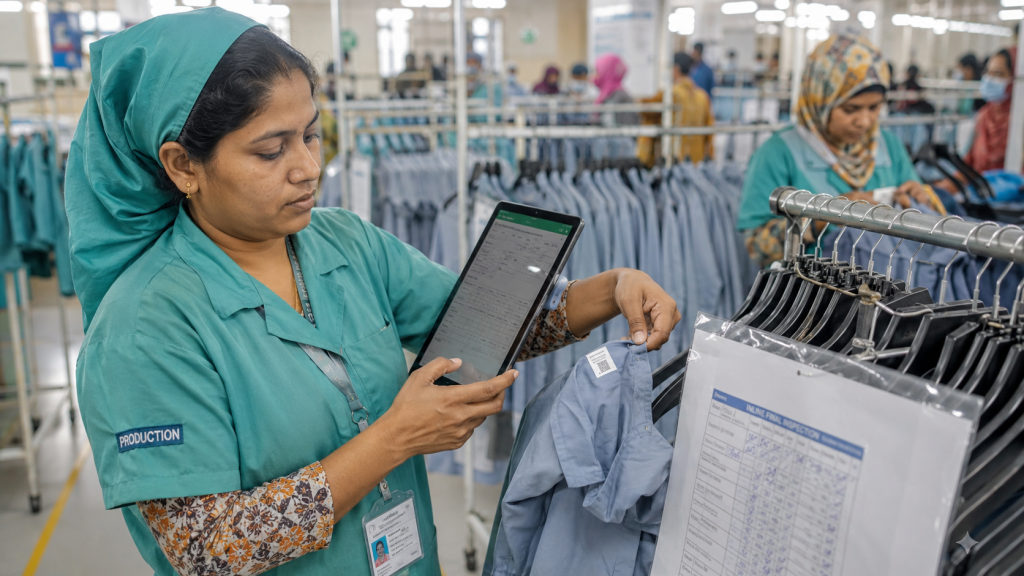
Many Bangladeshi apparel suppliers already collect substantial compliance and production information. Factories manage certificates, audit files, material records, chemical compliance documents, order sheets, shipment records, and buyer templates.
The problem is that this data is often fragmented.
Some information sits in spreadsheets. Some is stored in PDFs. Some is held by compliance teams, some by merchandising teams, and some by suppliers outside the factory. When a buyer asks for product-level traceability, teams may need to search across departments, emails, folders, and third-party documents.
This creates repeated work and increases the risk of inconsistency.
A DPP-ready system makes product information more structured, reusable, and easier to verify. Instead of responding to every buyer request manually, suppliers can build organized records that support multiple compliance and reporting needs.
Buyers are moving from claims to evidence
Sustainability claims are no longer enough. Brands are increasingly expected to support their statements with evidence, and that evidence often begins with suppliers.
If a product is described as recycled, organic, responsibly produced, low-impact, or traceable, buyers need documentation that supports the claim. Without reliable supplier-side data, brands cannot build credible product-level transparency.
This is especially important for Bangladesh because many international buyers already source large volumes from the country. A stronger data infrastructure can make it easier for buyers to continue sourcing with confidence.
Suppliers may increasingly be compared not only on price and capacity, but also on how quickly and reliably they can provide traceability data.
DPPs can reduce operational pressure
At first, DPP may sound like another compliance burden. If implemented well, it can reduce pressure instead of adding to it.
Suppliers often repeat similar documentation work for different buyers. One buyer may request factory information in one format, another may ask for certification data in another, and a third may require sustainability records through a separate platform.
DPP readiness can help standardize the data foundation. Once product and supplier information is organized properly, the same data can support the buyer onboarding, ESG reporting, audit preparation, traceability requests, and future regulatory requirements.
The goal is not more paperwork. The goal is better data flow.
Bangladesh's supply chain complexity makes DPP more necessary
A single garment may involve yarn suppliers, fabric mills, dyeing and finishing units, garment factories, washing facilities, trims suppliers, buying houses, logistics partners, and brands.
This complexity is normal in global apparel production, but it makes traceability difficult without structured systems. If product data is collected only at the final stage, important upstream information may be missing or difficult to verify.
For Bangladesh, DPP should therefore be viewed as infrastructure, not only compliance. It creates a stronger connection between physical production and digital evidence.
The business value goes beyond regulation
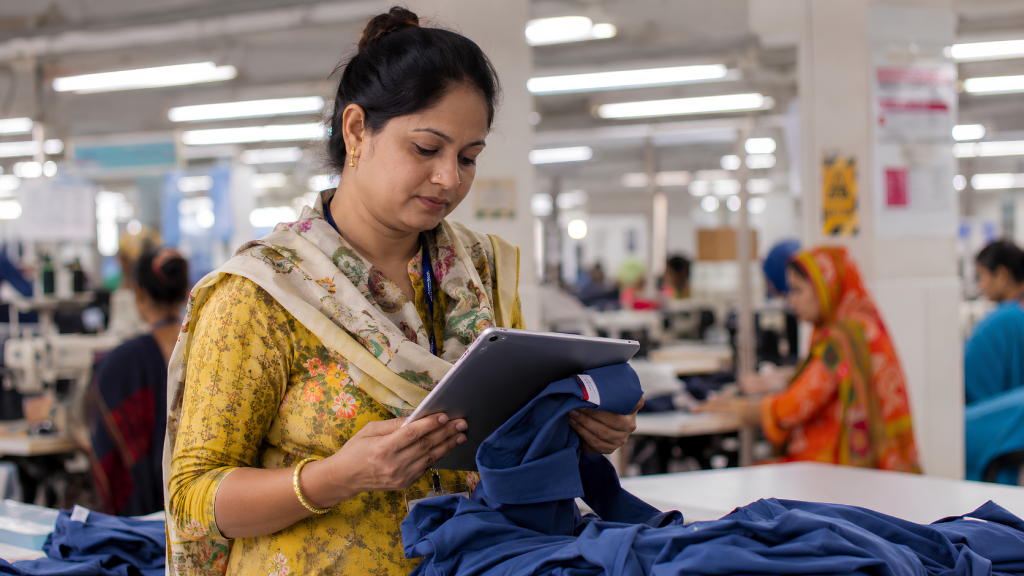
A supplier with strong product data can respond faster to buyer requests. Buying a house with better traceability coordination can provide more value to international clients. A manufacturer with organized sustainability evidence can reduce audit stress and improve buyer confidence.
As sourcing becomes more competitive, buyers may prefer supply chains that reduce risk. A DPP-ready supplier can show that it is capable not only of producing garments, but also of supporting transparency, ESG reporting, and future regulatory change.
In this sense, DPP readiness becomes part of commercial credibility.
What should suppliers start doing now?
Factories can begin by identifying what product data they already collect, where it is stored, who owns it internally, and which documents are missing or duplicated. Buying houses can map recurring buyer requirements and help suppliers prepare common data points in advance. Industry-wide coordination can ensure that smaller suppliers are included rather than left to manage the transition alone.
DeviceStamp is not approaching this transition as one of many standalone technology providers. Through its partnership with the Bangladesh Garment Buying House Association (BGBA), DeviceStamp is building the industry infrastructure layer needed to make Bangladesh's apparel supply chain DPP-ready.
That infrastructure begins on the supplier side. It includes supplier onboarding, structured product data, traceability records, certification evidence, and connections to buyer, compliance, and DPP systems. The objective is a reusable foundation that works across factories, buying houses, and international buyer relationships—not another isolated platform that forces suppliers to repeat the same work.
Preparing for the next export standard
Bangladesh has adapted many times to changing global buyer expectations. DPP is another adaptation, but it connects compliance, sustainability, digital infrastructure, and market access more closely than before.
The industry already has the manufacturing strength. Through the DeviceStamp–BGBA partnership, it is now building the coordinated data and traceability infrastructure needed to match it.